
Same-Day Dispatch – Order Before 4:30pm (Mon–Fri) | Free Tracked 24 on Orders Over £50 | 20% Off Your First Order – Code WELCOME20
GLP-1 / GIP Dual Receptor Agonist · Research Compound

TZ2 (Tirzepatide)

LY3298176 · Dual GIP/GLP-1 Receptor Agonist

This TZ2 research guide covers its dual GLP-1/GIP receptor mechanism, research applications and available sizes for laboratory study — the critical bridge compound between GLP-1 mono-agonism and triple receptor research.
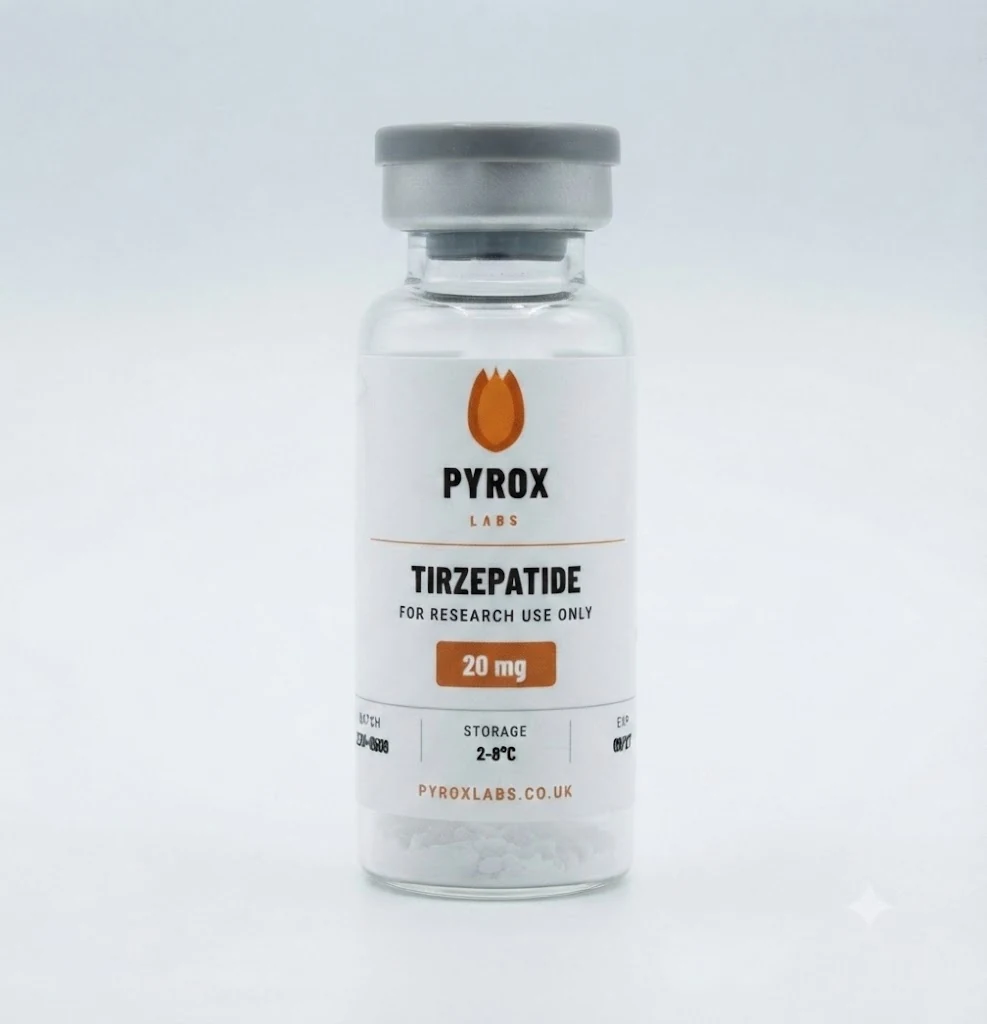
TZ2 20mg research vial — Pyrox Labs
Also Known As
LY3298176
Receptor Targets
GLP-1R · GIPR
Type
Dual Agonist
Available Sizes
5mg · 10mg · 20mg
Storage
2–8°C Reconstituted
Research Overview

What Is TZ2?

TZ2 (LY3298176) is a synthetic dual receptor agonist research compound that simultaneously activates both the glucagon-like peptide-1 receptor (GLP-1R) and the glucose-dependent insulinotropic polypeptide receptor (GIPR). Developed by Eli Lilly and Company, it is a 39 amino acid peptide incorporating a C20 fatty diacid modification that enables albumin binding and extended half-life in research models, as documented in peer-reviewed pharmacology literature.

Unlike SM1 which targets only the GLP-1 receptor, its GIP receptor co-activation opens additional research dimensions. The GIP receptor is expressed in adipose tissue, bone, the central nervous system and pancreatic beta cells — tissues not directly accessible through GLP-1 receptor research alone.

It represents the critical intermediate between GLP-1 mono-agonist research (SM1) and triple receptor research (RT3), making it an essential compound for comparative incretin pathway studies.

Research Use Only: TZ2 is supplied by Pyrox Labs exclusively for in vitro laboratory research and independent scientific study. Not for human consumption or therapeutic use.

Dual Receptor Mechanism

🔬
GLP-1 Receptor
Expressed in pancreatic beta cells, CNS, cardiac tissue and GI tract. Shared pathway with SM1 — allowing direct comparative research. This overlap is what makes the two compounds directly comparable in pancreatic and cardiovascular research contexts.
🧬
GIP Receptor
Expressed in adipose tissue, bone, CNS and pancreatic cells. GIP co-activation unlocks adipose signalling, bone metabolism and additional CNS research not possible with GLP-1 alone. GIP was historically treated as a secondary incretin pathway before dual-agonist compounds renewed research interest in it.
📊
Comparative Research
Enables direct comparison between mono (SM1) and dual receptor agonism outcomes, and between dual and triple (RT3) in the same research framework — making it well suited to head-to-head study designs spanning all three GLP-1 class compounds.

TZ2 vs SM1 — Key Difference

The defining difference between TZ2 and SM1 is GIP receptor co-activation. While both compounds activate the GLP-1 receptor, only this compound also engages the GIP receptor. This additional receptor pathway provides researchers with access to adipose tissue, bone and additional CNS signalling mechanisms that are not directly studied through GLP-1 receptor agonism alone. It is therefore the compound of choice for research requiring differentiation between GLP-1 and combined GLP-1/GIP pathway effects — researchers studying receptor selectivity often use it alongside SM1 as a paired reference set.

Research Applications

TZ2 Research Guide — Applications

🏥
Dual Pathway Research
Studying combined GLP-1 and GIP receptor pathway activation compared to mono-agonism in the same research model.
🧫
Adipose Tissue
GIP receptor expression in adipose tissue enables research into lipid metabolism and fat storage signalling pathways.
🦴
Bone Metabolism
GIP receptor expression in osteoblasts and osteoclasts opens bone metabolism research dimensions not available with SM1.
🧠
CNS Signalling
Dual GLP-1/GIP receptor expression in hypothalamic regions allows broader neuroendocrine appetite signalling research.
📈
Incretin Comparison
It is the essential intermediate for three-way incretin pathway comparison studies alongside SM1 and RT3.
🔬
Pancreatic Research
Both GLP-1R and GIPR are expressed in pancreatic beta cells, making it valuable for insulin secretion pathway research.
Available From Pyrox Labs

Sizes & Pricing

This TZ2 research guide includes full sizing and reconstitution details below. It's available in three individual vial sizes.

TZ2 5mg
Single research vial · Lyophilised · COA available
£24.99
Buy Now
TZ2 10mg
Single research vial · Lyophilised · COA available
£32.99
Buy Now
TZ2 20mg
Single research vial · Lyophilised · COA available
£49.99
Buy Now

Storage & Reconstitution

Store the lyophilised compound at room temperature away from direct light and moisture. Once reconstituted with bacteriostatic water, store refrigerated at 2–8°C and use within 28 days. Do not freeze reconstituted solution.

Full Reconstitution Guide →

Research Use Only: TZ2 supplied by Pyrox Labs is intended exclusively for in vitro laboratory research and independent scientific study. Not a licensed medicine. Not for human consumption, self-administration or therapeutic use. Pyrox Labs provides no medical advice.


Peptide SupermarketListed on Peptide Supermarket
Shopping Cart

New Here?

GET 20% OFF YOUR FIRST ORDER

Enter your email and we’ll reveal your one-time welcome code — plus we’ll keep you posted on new compounds and offers.

One-time use on your first order. No spam, unsubscribe anytime.

You’re In

HERE’S YOUR CODE

Use at checkout
WELCOME20

Valid throughout August on your first order.

Out Of Stock

Notify Me When Back In Stock

Leave your email and we'll send you a one-time alert the moment this is back - no spam, no newsletter.

You're On The List

We'll email you the moment this is back in stock.

0
    0
    Your Cart
    Empty CartYour cart is emptyReturn to Shop
    Secure Checkout
    Fast Shipping
    Easy Returns
    Scroll to Top