
How To Reconstitute Peptides
Learn how to reconstitute peptides safely and accurately for laboratory research. This complete guide covers equipment, technique, dilution calculations and storage for lyophilised (freeze-dried) peptide compounds — strictly for in vitro and scientific research purposes only.
What Is Reconstitution?
Peptide compounds are supplied in lyophilised (freeze-dried) powder form. This process removes moisture from the compound, significantly extending its shelf life and maintaining structural integrity during storage and transit. Understanding how to reconstitute peptides correctly is essential, since the lyophilisation and rehydration technique used directly affects the stability of the resulting solution — see the peer-reviewed literature on peptide lyophilisation and reconstitution stability for further reading.
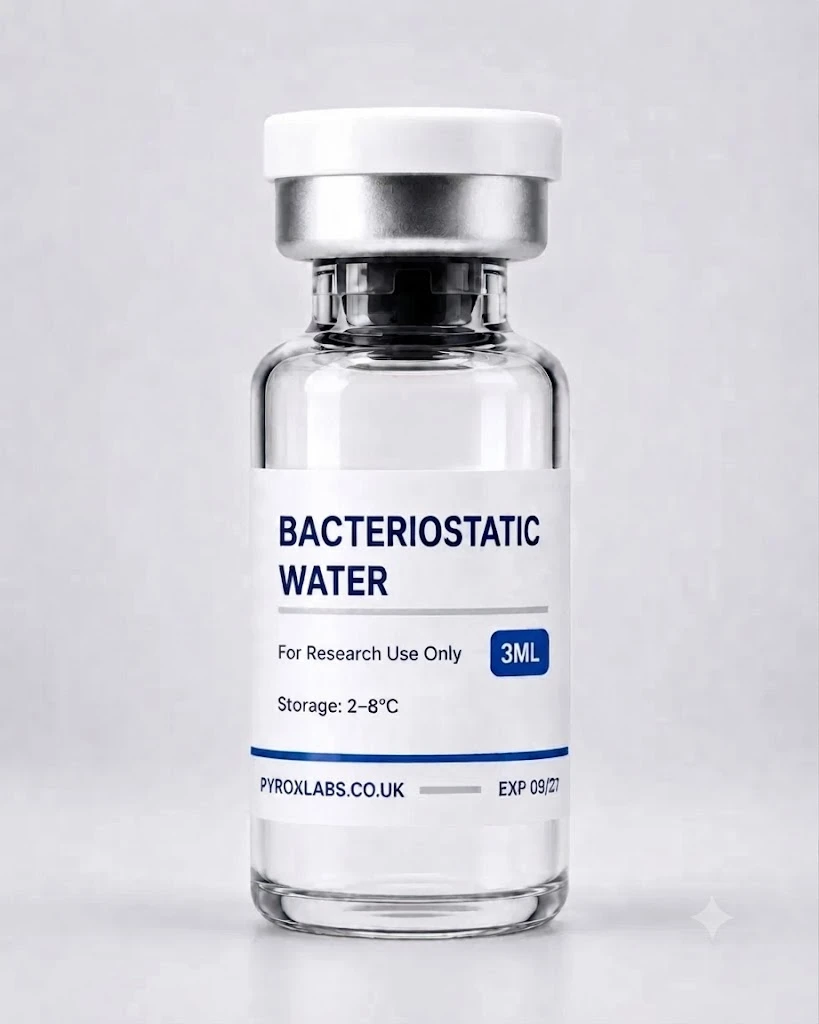
Reconstitution is the process of dissolving this powder in a sterile liquid — typically bacteriostatic water — to create a usable solution for laboratory research applications.
The process is straightforward but requires careful technique to maintain compound integrity, avoid contamination and achieve accurate concentrations.
What You Need
Before you learn how to reconstitute peptides, ensure you have all required equipment prepared in a clean, sterile environment.
Reconstitution Calculator
Use this calculator to work out your solution's concentration and exactly where to draw a syringe to for a given research dose — pick your values from the dropdowns below, no typing required.
🧮 Research Dilution Calculator
This calculator is for research planning purposes only. Always verify calculations independently before laboratory use.
How To Reconstitute Peptides: Step-By-Step Process
Follow these steps carefully as you learn how to reconstitute peptides in a clean environment. Take your time — accuracy and sterility are the priority.
Prepare Your Environment
Work on a clean, flat surface. Wash hands thoroughly and put on nitrile gloves. Lay out all equipment before starting. Ensure the peptide vial is at room temperature before reconstituting — cold powder may not dissolve evenly.
Calculate Your Volume
Decide how much bacteriostatic water to add based on your research concentration requirements. Use the calculator above. A common starting point for a 10mg vial is 2ml of bacteriostatic water, giving a concentration of 5,000 mcg/ml (5mg/ml).
Swab Both Vial Tops
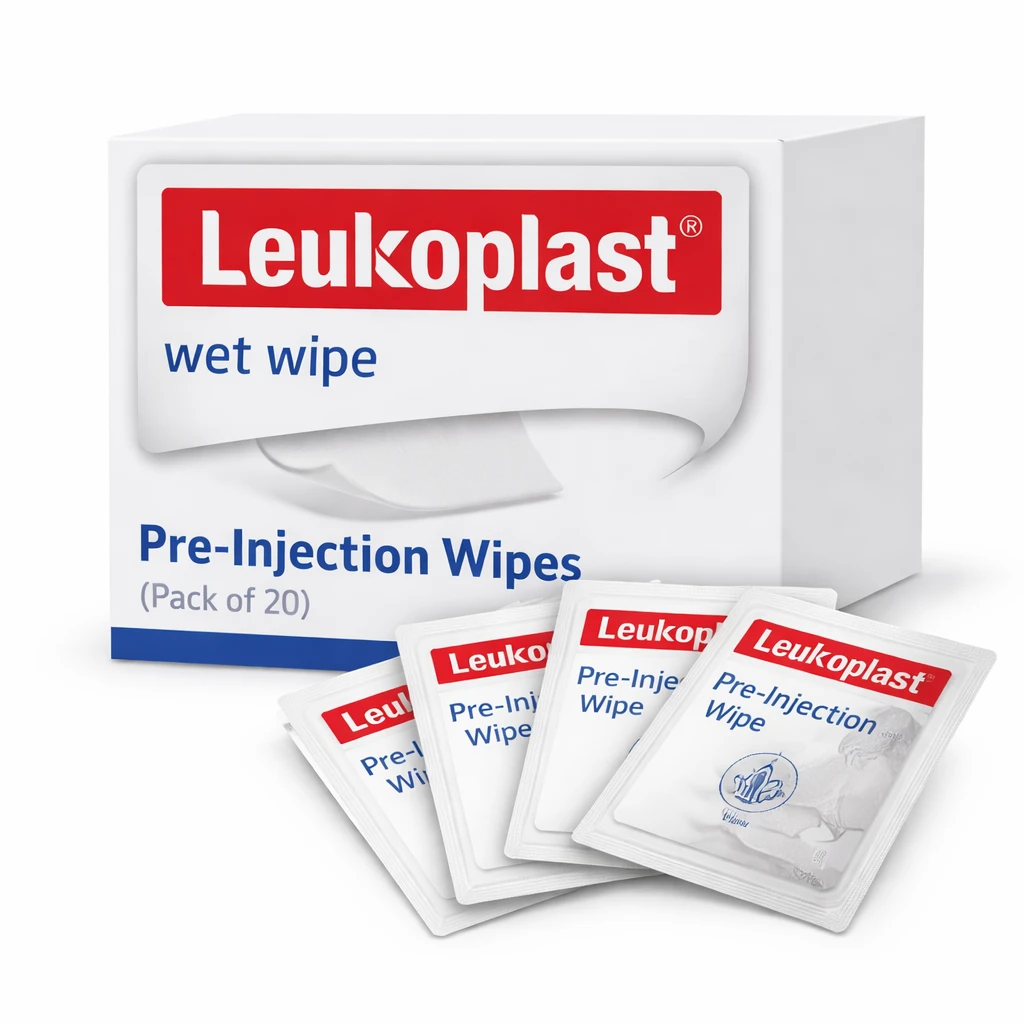
Using a fresh alcohol swab, clean the rubber stopper on both the bacteriostatic water vial and the peptide vial. Allow to air dry for 10–15 seconds. Never touch the rubber stopper with bare hands after cleaning.
Draw Bacteriostatic Water
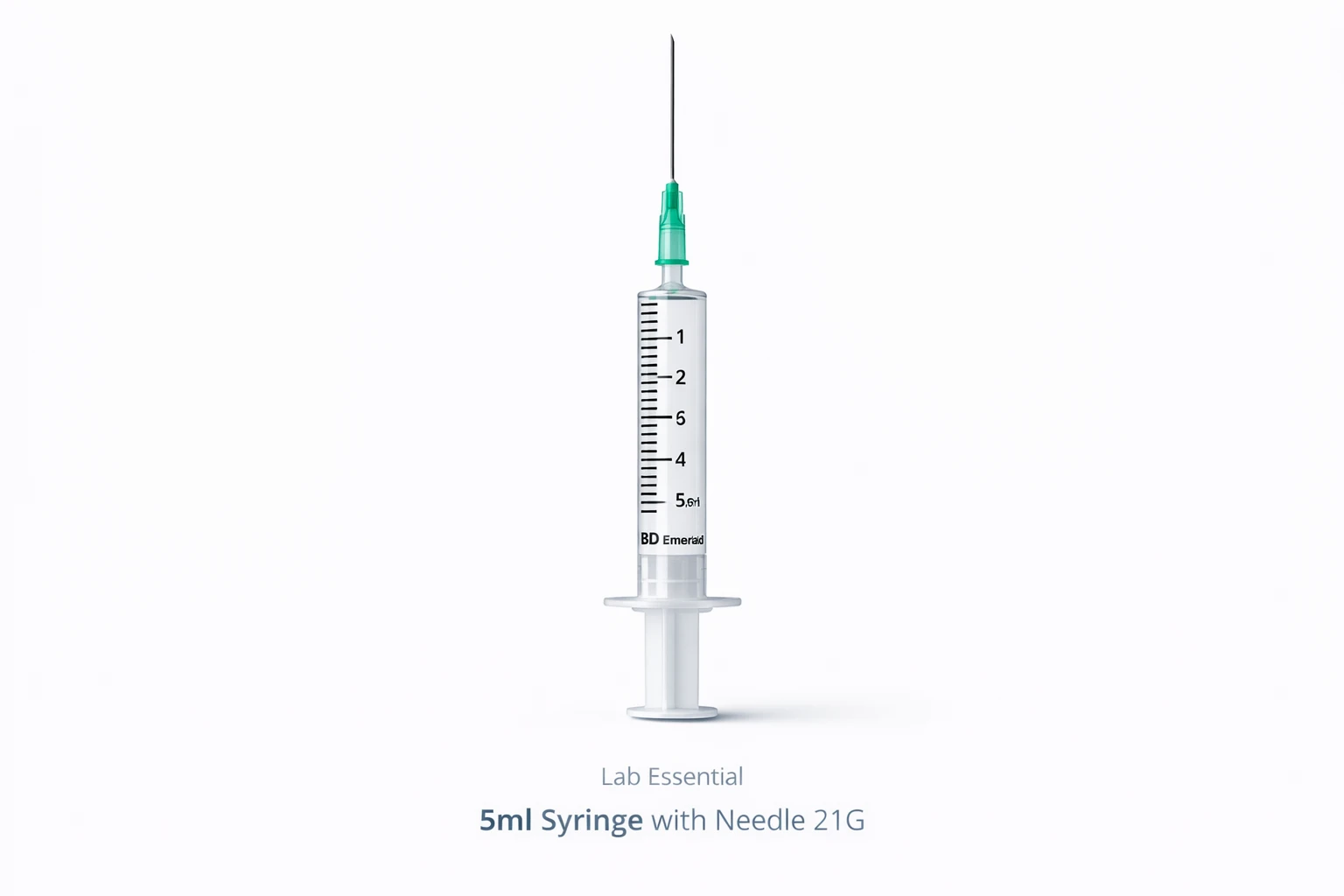
Using your reconstitution syringe (5ml, 21G), draw the required volume of bacteriostatic water from the BAC water vial. Check for air bubbles — tap the syringe gently and expel any bubbles before proceeding.
Add Water to Peptide Vial
Insert the needle through the rubber stopper of the peptide vial at a slight angle. Do not inject directly onto the powder. Aim the needle at the glass wall of the vial and allow the water to run slowly down the side. This prevents damage to the peptide structure from forceful injection.
Dissolve the Powder
Once all the water has been added, do not shake the vial. Instead, gently swirl or roll the vial between your palms until the powder is fully dissolved. The solution should become clear. This may take 30–60 seconds. If the solution remains cloudy, allow it to sit for a further 5 minutes and swirl again.
Inspect the Solution
Hold the vial up to light and inspect for undissolved particles or unusual cloudiness. A fully reconstituted peptide solution should be clear and colourless (some peptides may have a very slight tint — this is normal). If particles remain, continue gentle swirling.
Label and Store Immediately
Label the vial immediately with the compound name, concentration, date of reconstitution and initials. Store in the refrigerator at 2–8°C. Do not freeze. Refer to storage guidelines below for shelf life information.
Storage Guidelines
Proper storage is critical to maintaining the integrity of your reconstituted peptide solution throughout your research period. For guidance on verifying compound purity as part of how to reconstitute peptides, see our Certificates of Analysis.
General Storage Rules
- Keep away from direct light — UV exposure can degrade peptide bonds
- Avoid temperature fluctuations — do not leave on a bench for extended periods
- Always use a fresh, sterile needle each time you draw from a reconstituted vial
- Swab the vial top with alcohol before every draw
- Discard any solution that becomes cloudy, discoloured or develops particulate matter
- Record reconstitution date on the vial label and adhere to the 28-day guideline
Common Research Questions
What if the powder won't dissolve?
Some peptides are more difficult to dissolve than others. If the powder is not dissolving after gentle swirling, try placing the vial in the refrigerator for 15–20 minutes then swirling again at room temperature. Ensure the vial has reached room temperature before adding bacteriostatic water, as cold powder dissolves more slowly.
Can I use sterile water instead of bacteriostatic water?
Sterile water can be used for single-use applications in laboratory settings, however bacteriostatic water (containing 0.9% benzyl alcohol) is strongly recommended for multi-use vials as it inhibits bacterial growth and extends the usable life of the reconstituted solution to approximately 28 days under refrigeration.
What is the difference between IU and mcg on an insulin syringe?
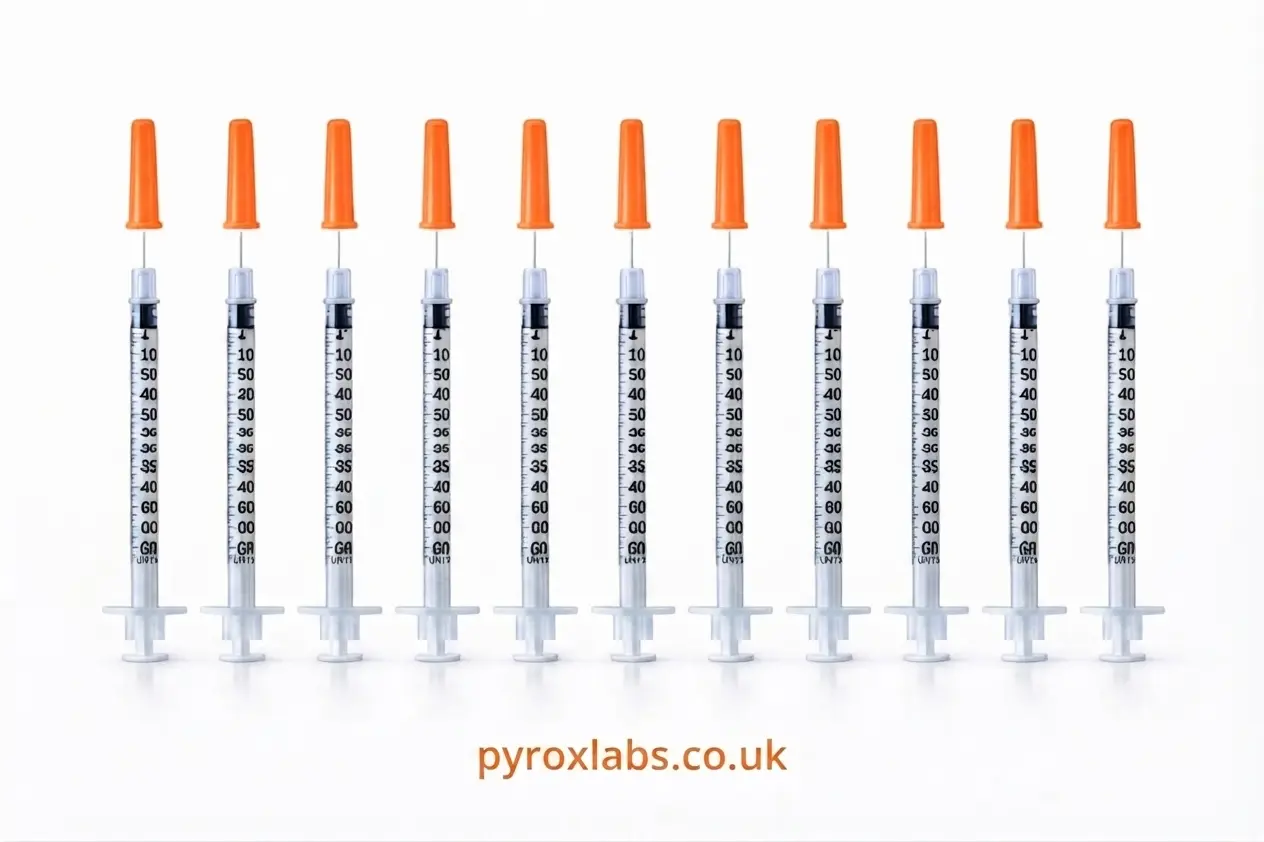
On a standard U-100 insulin syringe, each 1 IU marking corresponds to 0.01ml (10 microlitres) of liquid. This is useful when calculating research volumes from your concentration. Use the calculator above to determine the corresponding volume for your required concentration.
How do I know if the peptide has degraded?
Signs of potential degradation include: solution becoming cloudy or discoloured, visible particulate matter that does not dissolve with gentle swirling, unusual odour, or solution that has been stored beyond the recommended 28-day window. Discard any suspect solution and prepare a fresh reconstitution.
Can I refreeze the lyophilised powder?
The lyophilised powder (before reconstitution) can be stored at room temperature and does not require freezing. Once reconstituted, the solution should not be frozen. If you have excess powder that you do not intend to reconstitute immediately, store it sealed in the original vial at room temperature, away from light and moisture.
Do I need special training to reconstitute peptides?
No specialised certification is required, but researchers should be familiar with basic aseptic technique before they learn how to reconstitute peptides. If you are new to laboratory handling, review our Peptide Glossary and Certificates of Analysis pages alongside this guide before beginning.
Lab Essentials Available From Pyrox Labs
All the equipment required to reconstitute peptides is available directly from our Lab Essentials range alongside your research compounds.
- Bacteriostatic Water 3ml (also available in 10ml) — Sterile, preservative-containing reconstitution solution
- Reconstitution Syringe 5ml 21G — For drawing and adding bacteriostatic water
- Insulin Syringe 0.5ml 29G (Pack of 10) — For precise volume measurement
- Leukoplast Pre-Injection Wipes (Pack of 20) — Sterile alcohol swabs